Pay Attention to the “Other Questions”
The 1820 – 1840 censuses asked questions, usually buried within the hash marks on the second page, that can not only give you more information about your ancestors, but also can point you to other areas of research to pursue.
Questions on Health
On the 1830 and 1840 censuses, questions were asked about disabilities for every family counted. While those disabled persons were not identified by name, you may be able to find out who they were.
One way is to consult guardianship records. Our ancestors were concerned about caring for the poor and disabled and made provision for those who could not care for themselves. These records will usually be found in the probate section with wills and other probate documents.
Like the poorhouses that could be found in many counties, states also provided institutions or hospitals for the disabled. If your ancestor was in one of these places, there would have been a record created that may still exist. One place to check for what records might still exist is the FamilySearch Wiki page on United States Asylum Records at https://www.familysearch.org/en/wiki/United_States_Asylum_Records
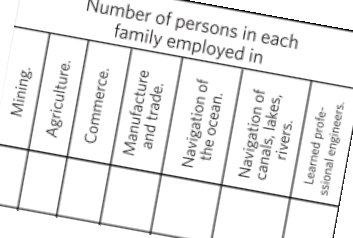
Occupation Categories
The 1820 and 1840 census asked how many people in each household were involved in categories of occupation. For most of our ancestors the answer is going to be Agriculture. If your ancestor was involved in another category, such as manufacturing or commerce, there may be other records available. Often people involved in commerce had to get a license to operate, such as an Ordinary (saloon keeper) or ferry operator. Those are found in the counties court orders or possibly deed records. If they were in manufacturing there may be mortgages or deeds of trust where they borrowed money to purchase supplies.
Education
Stuck at the end of the second page of the 1840 census is a section asking about the educational facilities available in the county. This section was misunderstood by many of the marshal’s assistants taking the census, but if you find that there was a college or university indicated and your ancestor’s family had some older children in it, you may want to investigate further to find this college and see if any records exist.
The last thing to mention about the 1840 census is the column on the second page listing Revolutionary Pensioners. This is not all Revolutionary Patriots, but only those who had been approved for a pension for their service. The name of the pensioner should be listed, which is helpful because often they are not the heads of the household. This census was taken sixty two years after the Revolutionary War ended, so these pensioners would have been around seventy five years old or older.
Next time we are going to jump into the Non-Population schedules. These schedules can give insight into the kind of lives your ancestors were living, even as specific as their daily schedules! Have a comment or question? Drop us a line below.
We’d love to know what you think! Please leave a comment below.
Subscribe to this blog by filling out this simple form: