
A Census by Another Name
We’ve been talking about the population schedules of the U.S. census. They are the ones you normally think of as the census, the schedule that counted everyone in the nation. Pictures of census enumerators often show them with a one book, although usually a large one. In reality, census enumerators carried several books with them, depending on where their enumeration district was located. They would have had the population schedule and the mortality schedule. If their district was in a rural area or the countryside, they would have also carried the agricultural schedule.
While the population schedule did what its name implies, counted every member of the population, the non-population schedules measured different aspects of the population, things like what crops were farmers raising, what churches were Americans attending, or how much of the population had a disability. Some of them counted people in certain categories, some did not count people at all but gathered facts about social life or the economy.
Limited Availability
Unfortunately, the non-population schedules are not available for every census year. Mostly, they are available for the 1850-1880 censuses. A few fall outside that range, like the 1890 veteran’s schedule. Even from 1850-1880, not every type of schedule is available for every state. Some states have them all, some don’t have any. The National Archives web page at https://www.archives.gov/research/census/nonpopulation gives you a list of what’s available and where to find it (be sure to scroll down to the bottom of the page).
When you find one for the county where your ancestor lived, it can give you some information and lead you to search for even more.
Mortality Schedule
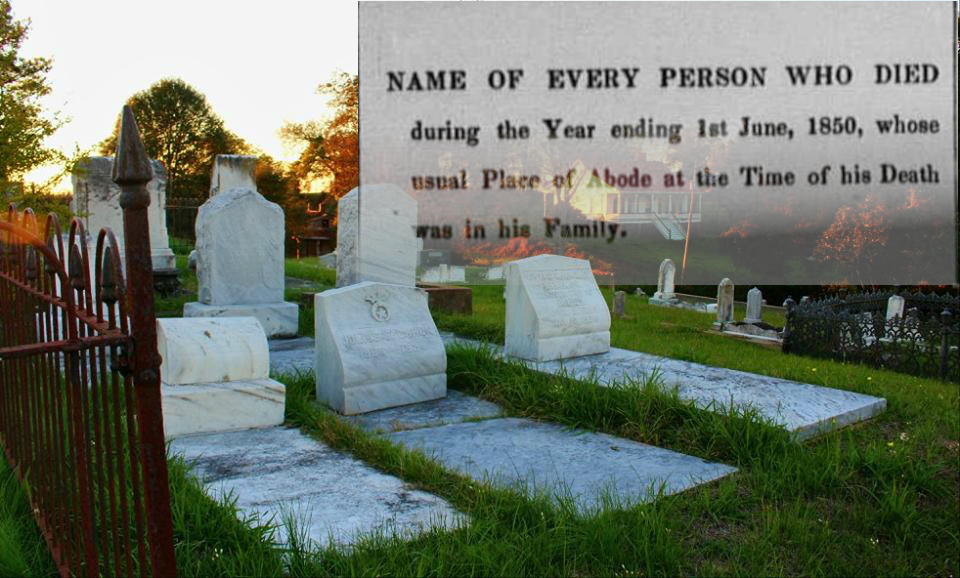
One example of this is the Mortality Schedule. The new information it will give you is whether your ancestor was married at the time of their death, what month they died, the cause of death, and how long they were ill.
There are also things you can learn that the census doesn’t tell you directly. Look on the pages before and after and notice the ages people died. Were most of the people old or young. I have looked on mortality schedules where half of the entries on the page were under three years of age. This lets me know the area had a problem with infant mortality. Look for pages where the cause of death was the same. Did the area have a pandemic during that year?
When looking at the mortality schedule, don’t forget that the deaths counted are for the year prior to the census date. The official date of the 1850 census was June 1, so the mortality schedule collected information on those people who passed away from June 1, 1849-May 31, 1850. If your ancestor deceased in August 1850 they won’t be on the 1850 mortality schedule.
The non-population schedules can give you information and understanding about your ancestors that you previously did not know. Next time, we’ll talk about one of my favorites, the agricultural schedule.
If you have any questions, drop us a line below!