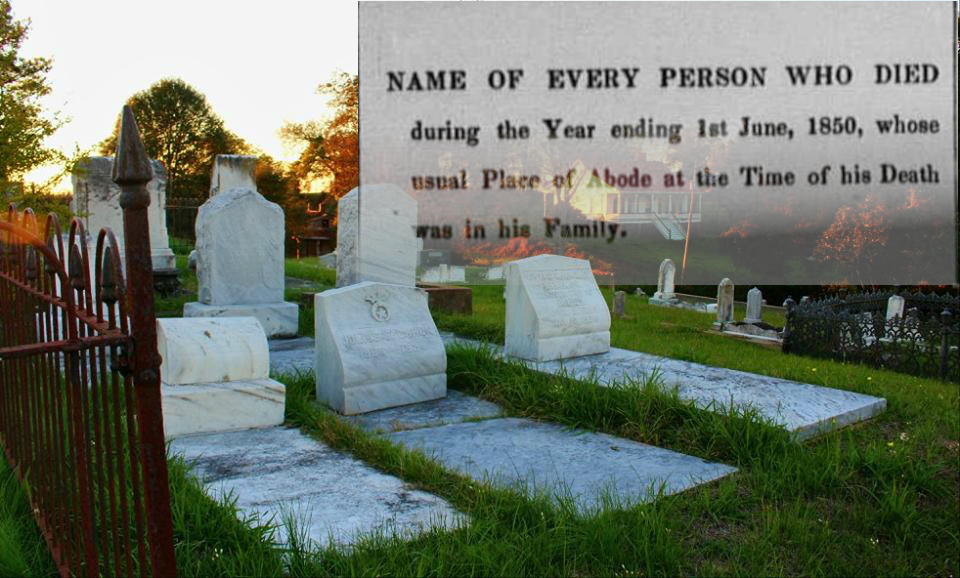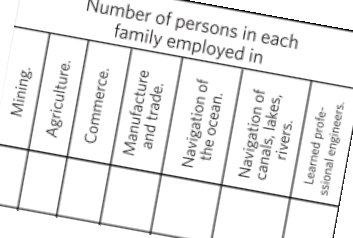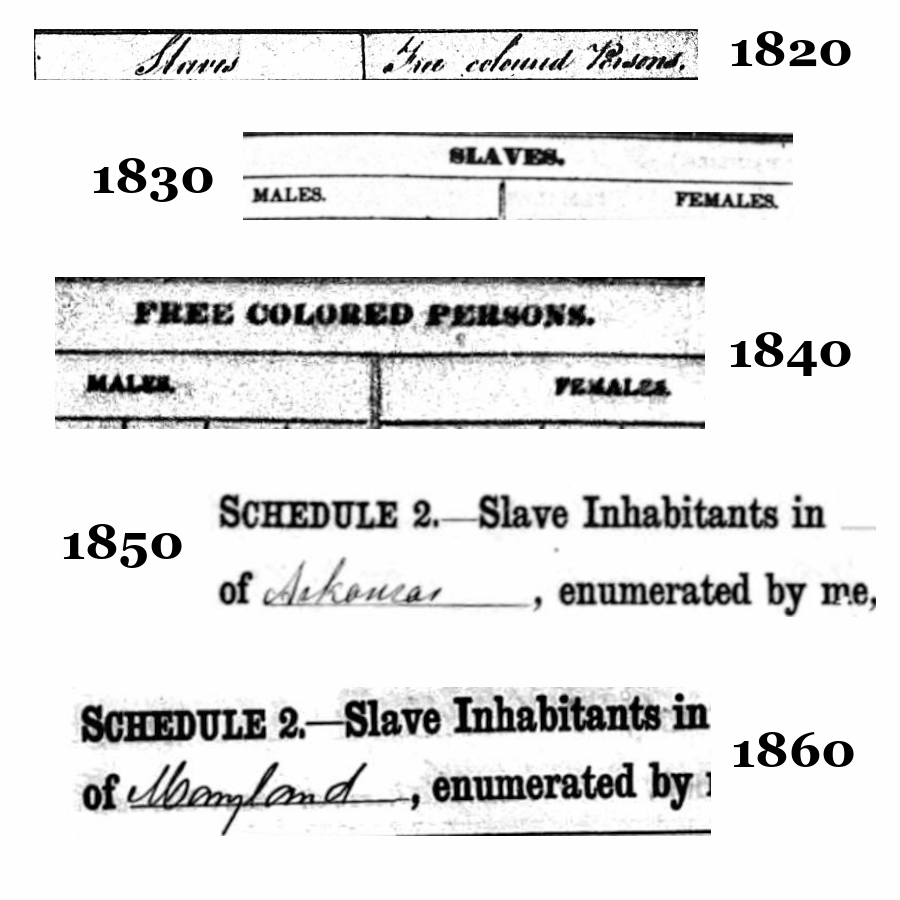
The U.S. Census counted the African American population from 1820-1860

Counting the Enslaved Population

Counting the Enslaved Population Most of us are familiar with the 1850 and 1860 Slave Schedule of the U.S. Census, but did you know that the enslaved were counted much earlier?  Starting in 1820 the enslaved population was counted, giving the age range and sex of each individual.  The number of slaves a person owned […]

Take your time figuring out these date ranges-herosofthepast.com

The Math Can be Tricky

The Math Can be Tricky Unless you are a math whiz, which I am not, don’t be afraid to use a calculator on this step.  Especially since you are switching the ages to date ranges, it can be confusing.  On the children, often you will only have two or maybe three decades to compare.  If

It’s Better Than You Think

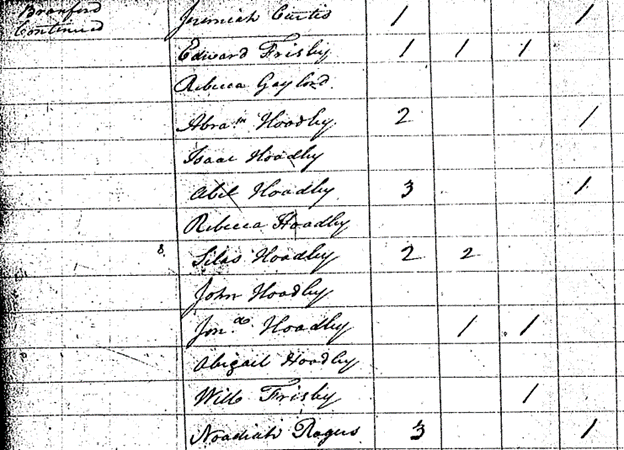
It’s Better Than You Think! At first glance the 1790-1840 census seems like not much help.   All you see is rows of hash marks with not much information.   However, if you look closely the information is there, it just takes a little more work to pull it out.  Here’s what you may find.  We’ll discuss

Serving Their Country

Serving Their Country Throughout the decades the census would ask questions about military service.  Here’s a summary. As you can see, these questions varied a lot and depended on the time period covered by each census.  I have not mentioned the 1890 Veterans Schedule, we’ll discuss that when we talk about the non-population schedules.  When

Do You Own or Rent?

Do You Own or Rent? Starting with the 1900 census, enumerators asked questions about the type of place a person was living in.  Like a lot of census questions, these varied a lot over the following decades.  The basic information asked each decade was: Prosperous or not? One of the primary things these questions can

Chasing the Records – Application

Chasing the Records-Application Now that all our heads are spinning, let’s get down to basics and see how we can actually use this information.  Born Elsewhere? One thing to look for is if a person’s parents were born outside the U.S.  The 1870 census asked if a person’s parents were foreign born.  The 1880 and

After your immigrant ancestor's saw Lady Liberty, they left records for you to find.

Chasing the Records

Chasing the Records Until 1820 there were no manifests or passenger lists required in the United States.  Before that, passenger identification was not required, but that does not mean there is no record of your immigrant ancestor.  Here are three possibilities. Who’s on Your Ship? After 1820 The Steerage Act required that ships captains submit

A group of immigrants swearing allegiance to the United States

Immigration in America

Immigration in America Finding immigration records on your ancestors who immigrated before 1906 can be, what you might call, a hot mess!  Let’s try to make a little sense out of what was a very complex and constantly shifting set of laws.  This will be a simple and brief explanation.  If you want more details,

In the early 1900s the census collected immigration information

A Citizen Now or in the Future

A Citizen Now or in the Future The next section on the census, starting in 1900, asks questions about citizenship.  Just to give you a heads up, we will take several posts to cover these questions, review a very brief history of citizenship in the U.S., and how you can use this information to find

Marital Status Expanded

Marital Status Expanded The next question on the 1900 census asks about a person’s marital status, then how many years they have been married.  The instructions to enumerators explains the question refers to their present spouse, but the question as it is asked is rather vague, so be careful and make sure that was what

Scroll to Top