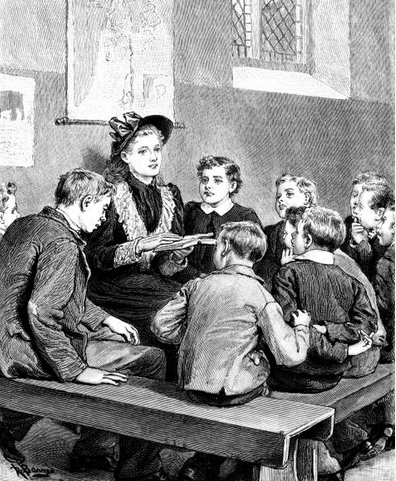
Whether a person could read or write could tell alot about their lives.

Reading, Writing, Rithmetic!

Reading, Writing, Rithmetic! Another question related to schooling is whether a person could read or write.    Although phrased differently, the basic question was asked in 1850-1930.  This question can tell us several things. You might wonder why the question stopped being asked after 1930.  By that time education had become standardized in the United States, […]

Even if a formal school wasn't available students could learn from anyone who could teach them

Have You Got the Smarts?

Have You Got the Smarts? Most of the census returns since 1850 have asked about schooling.   School related questions are on each census from that year until 1940 except for the 1880 census.  The 1950 census asks about schooling in the supplemental questions, so you have a one in five chance to learn about your

Disabilities

Disabilities One thing about the 19th century censuses that I have always been curious about are the questions about various disabilities.  From 1830 through 1880 and again in 1910 the census these questions appeared.  Some Possible Answers It’s important to remember that often people answered the census based on what they wanted others to know. 

When our ancestors developed and improved land it increased in value

How Much Are You Worth?

How Much Are You Worth? The 1850, 1860, and 1870 U.S. census returns all asked how much each person’s real estate was worth.  Believe it or not, this is a valuable question for many reasons.  The 1860 and 1870 census also asked the value of a person’s personal property.  This can be almost as useful!

Nativity

Nativity The last question that was asked on every U.S. census from 1850-1950 was where a person was born.  I, like many of you, lament the enumerator not asking the name of the county as well as the state.  After all, how hard would it have been? Other Countries Sometimes when a person was foreign

They Pay You For That?

They Pay You For That? One of the last questions that has been standard over every census since 1850 is occupation.  Starting in 1910 the census enumerator would also ask what industry the person was in, providing a lot more detail. There are a few things to consider when evaluating this answer.  The first is

The 1880 census described marital status as "Civil Condition." Marital status on the census can lead you to records that tell you more about your family.

Civil Condition Please?

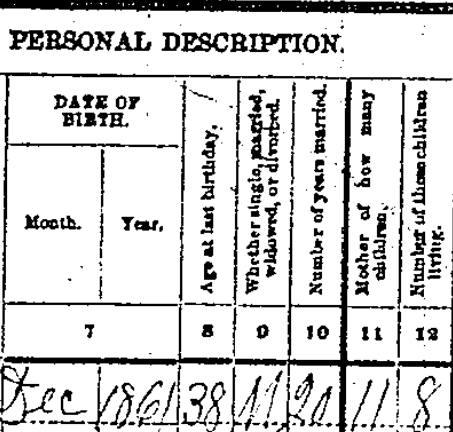
Civil Condition Please? Believe it or not, that was the question asked on the 1880 census to determine whether a person was married, widowed, or divorced.  Since 1880 this personal status has been required.  As family historians there are several things we can learn from an ancestor’s marital status. Follow the Clues The main thing

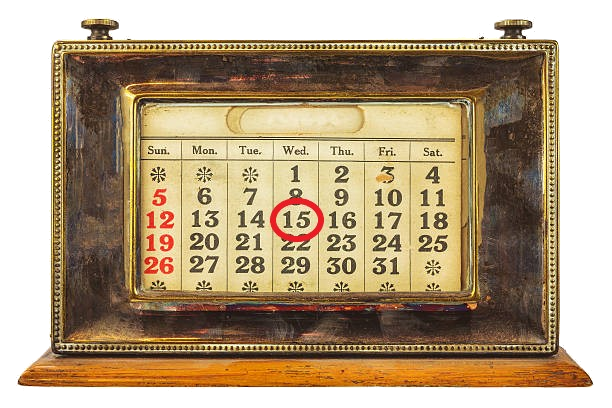
Our ancestors 200 years ago did not mark dates on the calendar like we do today

All Present?

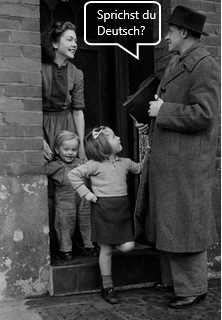
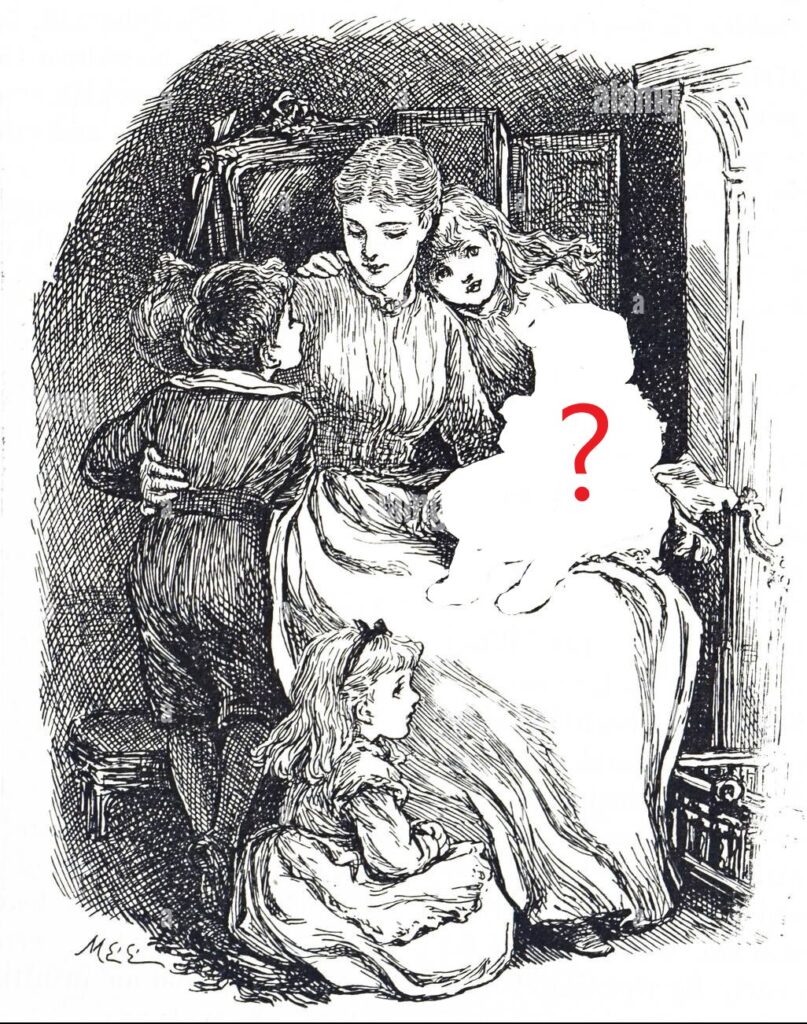
All Present? It’s easy to imagine our ancestors in situations that are unrealistic for them.  Many have seen the picture of the census taker visiting a family with mom, dad, and all the kids gathered around.  Unfortunately, this was rarely the case.  More realistic is that dad was gone in the early morning, the kids

When the U.S. census gives you clues...investigate!

Are We Related?

Are We Related? In 1880 Congress gave Family Historians a gift.  They put a column on the census form that asked each person’s relationship to the head of the household.  Early On In the censuses before this one, 1850, 1860, 1870, we often assumed that the people in that home were a man, his wife,

When our ancestors could not read what was being written in the census their names may have been recorded very differently than the normal spelling

Your Ancestor’s Name … Maybe!

Your Ancestor’s Name … Maybe! The first major column in the census, and arguably the one our eyes are first drawn to, are the names.  Ideally these names would be the proper names of our ancestors, would be spelled correctly, and would be legible.  Unfortunately that is often not the case. 19th Century Literacy Literacy

Scroll to Top