
It’s Better Than You Think!
At first glance the 1790-1840 census seems like not much help. All you see is rows of hash marks with not much information. However, if you look closely the information is there, it just takes a little more work to pull it out. Here’s what you may find. We’ll discuss each of these further.
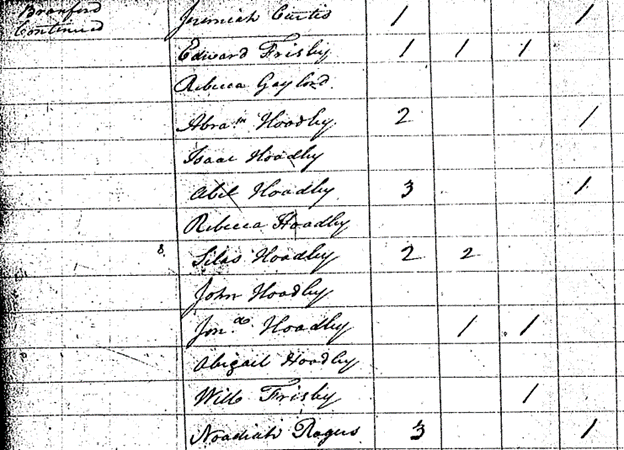
- These censuses can tell you where your ancestors were living for each decade.
- They can help you identify an age range for your ancestors and their children.
- They can identify a history of chronic illness.
- The 1840 census identifies Revolutionary pensioners.
- The 1820-1840 censuses can give you a broad view of what your ancestors did for a living.
- They can tell you if your ancestor was a citizen.
- The 1830 and 1840 censuses give partial information about a person’s slaves
Proceed with Caution
One thing to note about the early censuses is the information they contain must be used carefully. Since the only thing listed is a person’s name, you must take care to ensure that the entry you are looking at is your ancestor and not someone else with the same name. Especially since often the name is listed only with the first initial. Even if your ancestor’s surname was not a common one, there could often be several McClures or Comerfords in the same county.
The best way I have found to prevent this is to compare the ages of a person and their family to what you already know. If you know your ancestor was born around 1800 and had a bunch of kids, you don’t want to choose a person in the census who was 60-69 in the 1830 census and only his wife was in the household.
Mistakes Happen
When making these comparisons don’t require they be absolutely correct. It’s great if they are, but remember, the census enumerators were using handwritten forms, usually with no column headings on the pages. Having to remember which columns go with which age ranges, and lining them up correctly, often without a hard surface to write on, would naturally invite some error. However, your age comparison should at least be close.
Next time we’ll talk about how you can use a chart to identify an age range for your ancestors and the children in their home. Sometimes you can determine their age withing 3-4 years. If this kind of detailed analysis is not your cup of tea, leave it to us! We’re analyzing fools! Contact us today to get started!