Information Overload! The 1900 Census
I have to admit, if I am researching someone who was alive at the beginning of the 20th century, the record I most want to find is the 1900 census. It’s packed full of new information that was not asked before. Not only does the 1900 census answer many new questions, it also points me toward research that will answer many more. Over the next several blogs we will take a look at the 1900 census, examine the questions it answers, and see what research it prompts us to do that will answer even more.
When Were You Born?
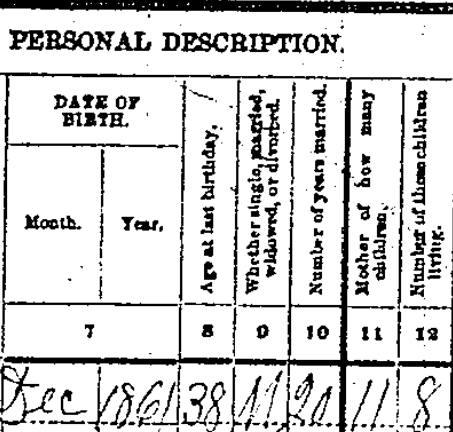
Moving from left to right, the first new question asked was the month of birth. While the age was asked from 1850-1870, knowing the month helps me even more. I don’t have to calculate the age of young children on the census by figuring which month a 1 5/12 old was born. It also helps to distinguish between people in the same place with the same name. If there are five John Roberts in a county, and you find a marriage record that states John Roberts was 23 when he married on May 18, 1910, and the John Roberts you are related to appears on the 1900 census with a birth month and year of July 1887, unfortunately the marriage record is not for your John Roberts.
How Long Have You Been Married?
The next new question asked the number of years a person was married. This is really helpful because sometimes a marriage record has not been found. This can help you find the marriage record since you can calculate the year, or if you can’t find a marriage record at least you know the year they were married.
Did They Really Know?
One caveat to both these new pieces of information is whether our ancestors reported them correctly. Keeping track of appointments and schedules was not very important to our 19th century ancestors. Especially if you were a farming family, you measured the passage of time by the passing of seasons and when the sun rose and set. It was not until business started setting appointments and schedules and trains left and arrived at specific times did knowing exact times and dates become important.
If your schedule is taking up most of your time, your family’s history doesn’t have to remain a mystery. At Heroes of the Past, we are here to help! Contact us today to get started discovering the Heroes of Your Past!
We’d love to know what you think! Please leave a comment below.
Subscribe to this blog by filling out this simple form: