Civil Condition Please?
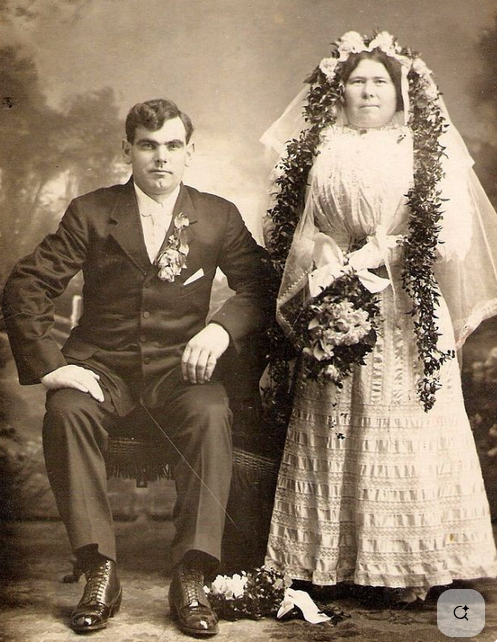
Believe it or not, that was the question asked on the 1880 census to determine whether a person was married, widowed, or divorced. Since 1880 this personal status has been required. As family historians there are several things we can learn from an ancestor’s marital status.
Follow the Clues
The main thing to remember is if your ancestor’s marital status is different from what you expect you need to find out why. It could be a mistake but it is more likely there is a reason. It will help to determine that reason if you read the instructions to the enumerator for the census you are examining. The criteria for who was to be included as a head of the household changed through the decades. Knowing who should be included and who should not will help you answer this question.
If a wife or mother is head of the household and lists herself as married, it is likely that either her husband is working in a separate place or they are separated, possibly even divorced. Finding this should send you in a search for him in another location. Because of the stigma of divorce in the late 19th and early 20th century, often people would not list divorce as there marital status. I have also seen cases where one spouse listed their marital status as married and the other as divorced.
Available Records
If you see this discrepancy, or if one partner lists themselves as divorced, you need to find their divorce records. The first step to finding them is to find the county where the divorce was filed. Look for clues on the censuses where the two spouses were living. Is one of them living with relatives? If children are part of the family, the mother will usually stay with the children at their home. Also look to see where the family was living in the previous census. It’s possible that is the county where they were divorced.
Divorces are one of the records that are not commonly found online, so when you determine the correct county you get to make a family history road trip. Yipee!
If the head of the household lists themselves as a widow or widower, then look for the death record of the missing spouse. Hopefully you have the census for the family for the previous decade and can narrow down your search. Since you know the time period when the missing partner deceased, look for an obituary in the local paper. If the deceased was born in another location, there may also be an obituary in that local paper.
Multiple Families
Be sure and check the marital status of the children as well. It was not unusual for married children to live with one of their parents until they were financially stable. Often the married children would have children of their own. If they did, they will be listed as grandchildren, since that is how they relate to the head of the household. Usually when this happened, the enumerator would list the single children first, then the married child and their family.
Sometimes untangling these relationships can be a challenge! At Heroes of the Past, we are here to help. Contact us today to discover your ancestors!
We’d love to know what you think! Please leave a comment below.
Subscribe to this blog by filling out this simple form: